Why Micro-Retirement Is Becoming the Biggest Lifestyle Trend Among Gen Z in 2026
Discover why “micro-retirement” is becoming one of the fastest-growing lifestyle trends among Gen Z in 2026 and how young professionals are redefining success.
Ravi Kumar
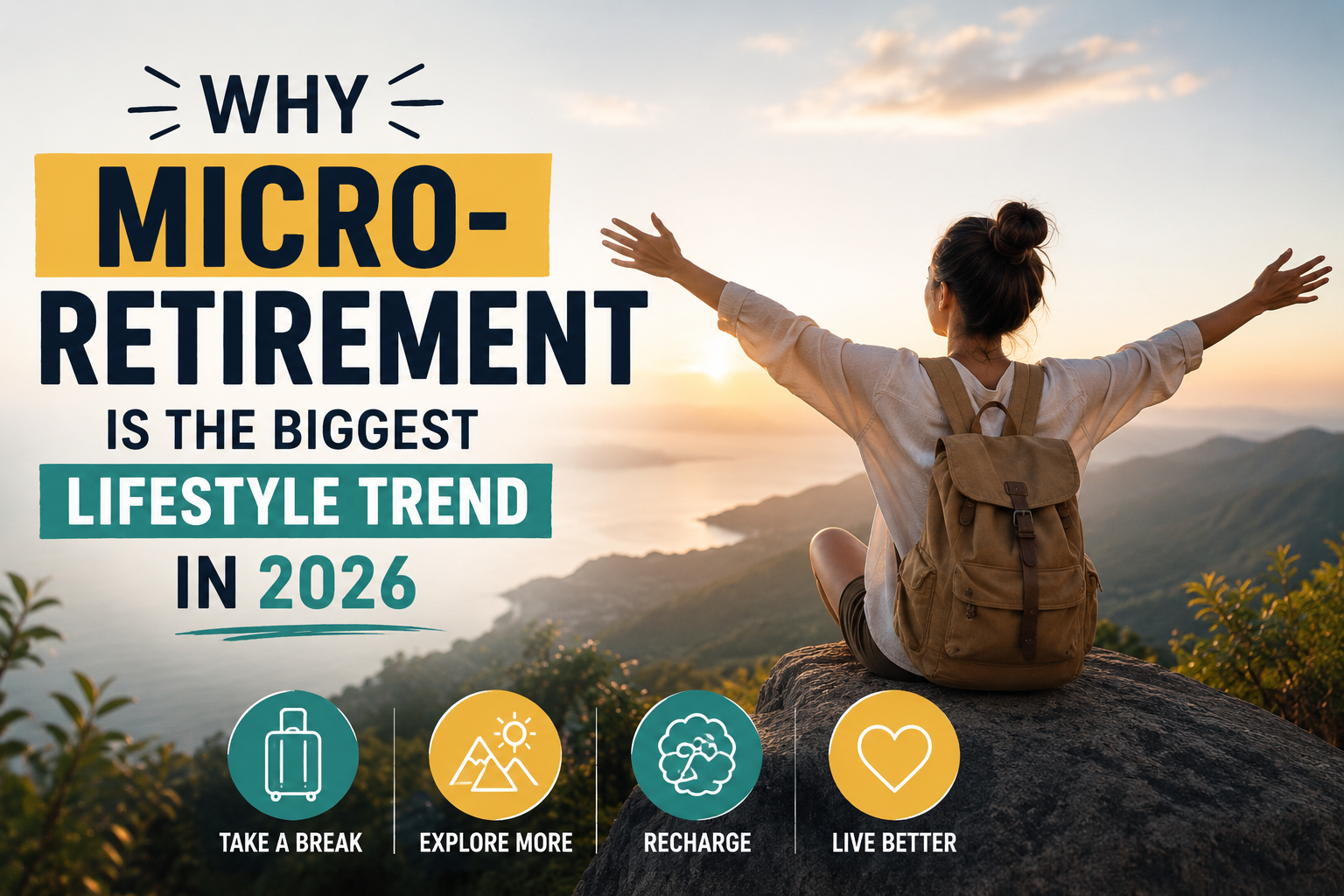
For decades, most people followed the same life formula:
work continuously for 40 years, retire later, and finally enjoy life afterward.
But Gen Z is increasingly questioning that idea.
Instead of waiting until their 60s or 70s to take long breaks from work, many young adults are choosing something completely different:
micro-retirement.
In 2026, the concept has exploded across:
The idea is simple:
instead of saving all rest, travel, and freedom for old age, people take shorter intentional breaks throughout adulthood.
These breaks may last:
And for many Gen Z workers, it feels far healthier than nonstop hustle culture.
What Is Micro-Retirement?
Micro-retirement refers to intentionally stepping away from work temporarily in order to:
Unlike traditional retirement, it is not permanent.
People eventually return to work, freelancing, studying, or new career opportunities afterward.
The goal is creating balance throughout life instead of postponing happiness indefinitely.
Why Gen Z Is Rejecting Traditional Hustle Culture
One major reason micro-retirement became popular is because younger generations grew up watching constant hustle culture online.
For years, social media pushed messages like:
But many young adults are now experiencing:
As a result, priorities are shifting.
More people now value:
Micro-retirement reflects that shift directly.
Remote Work Changed Everything
Remote work has dramatically changed how younger generations think about careers.
People no longer view work as something tied permanently to:
Instead, many workers now build more flexible lifestyles involving:
Because careers feel less linear, taking temporary life breaks feels more realistic and socially acceptable than before.
Travel and Experiences Matter More to Younger Generations
Many Gen Z adults prioritize experiences over traditional status symbols.
Instead of focusing entirely on:
…many people now value:
Micro-retirement allows people to experience parts of life now instead of constantly delaying enjoyment for the future.
Burnout Is Driving Lifestyle Changes
One of the biggest reasons behind this trend is burnout.
Constant digital connection means many people now feel mentally “online” all the time.
People regularly deal with:
Micro-retirement often becomes a response to that exhaustion.
Instead of pushing through burnout endlessly, some people intentionally pause and reset before returning to work again.
Social Media Helped Normalize Career Breaks
In previous generations, taking a long career break sometimes carried stigma.
Today, social media has normalized alternative lifestyles much more openly.
People now regularly share content about:
Seeing others take intentional breaks makes the idea feel more achievable and socially accepted.
Financial Concerns Still Exist
Of course, micro-retirement is not realistic for everyone.
Many people still face:
Because of this, critics argue that micro-retirement can sometimes appear idealized online.
However, many people practicing micro-retirement are not permanently avoiding work.
Instead, they are simply trying to create healthier pacing throughout adulthood.
The Definition of Success Is Changing
Perhaps the biggest reason this trend continues growing is because younger generations increasingly define success differently.
For many people today, success is no longer only about:
Instead, people now value:
That shift is influencing everything from careers to relationships to lifestyle decisions.
Technology Makes Flexible Living Easier
Modern technology allows people to maintain careers from almost anywhere.
Remote communication, freelance platforms, and online work opportunities have made flexible lifestyles far more possible than they were a decade ago.
People now build careers through:
This flexibility makes temporary lifestyle breaks easier to plan and manage.
Why This Trend Will Probably Keep Growing
Micro-retirement reflects a larger cultural shift happening globally.
People are increasingly asking:
Younger generations are not necessarily rejecting work entirely.
Instead, many are rethinking how work fits into life overall.
Platforms like GetKnowify reflect this broader shift toward more intentional digital lifestyles by encouraging meaningful interaction, social connection, and balance rather than constant performance or productivity pressure.
In many ways, micro-retirement is not just about taking time off work.
It is about redefining what a successful and balanced life actually looks like in 2026.